Prizes
Five Ding Prize Categories Officially Unveiled
The inaugural PhD Student, Postdoctoral Fellow, Supervisor, Sports, and Moyu awards now have formal trial rules covering internal nomination, selection, prizes, and ceremony arrangements.
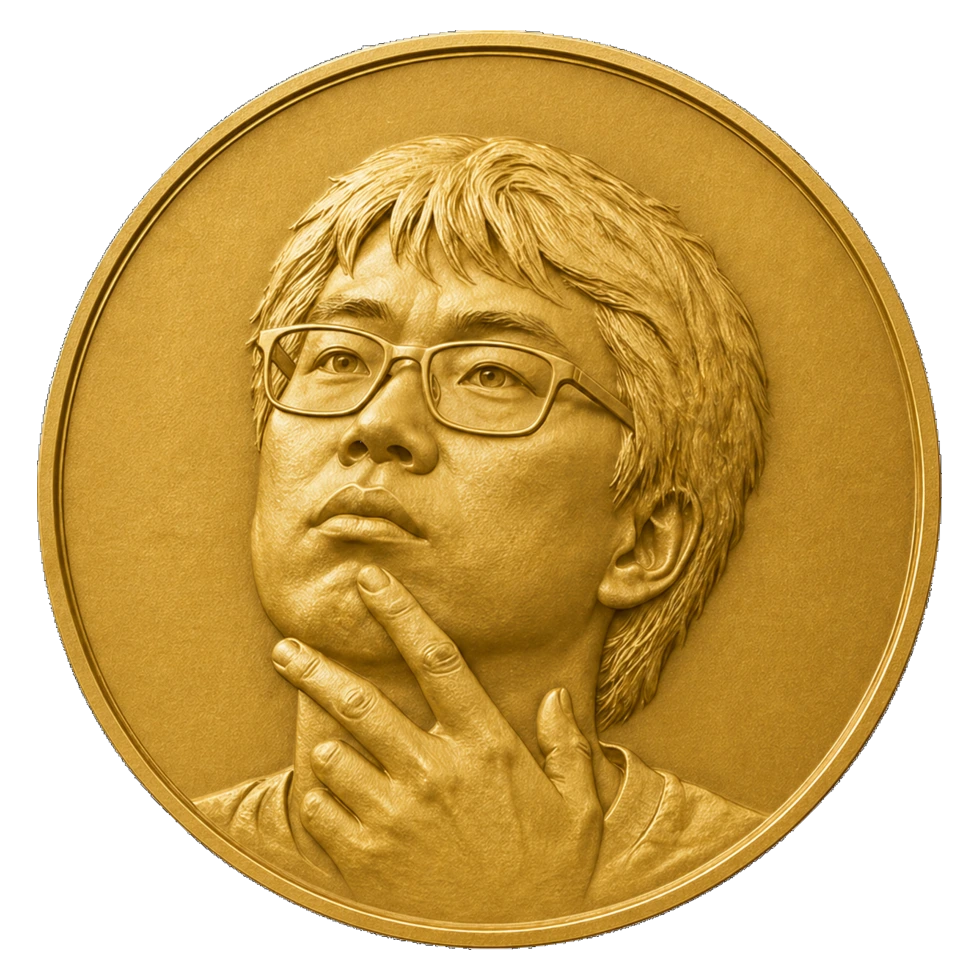
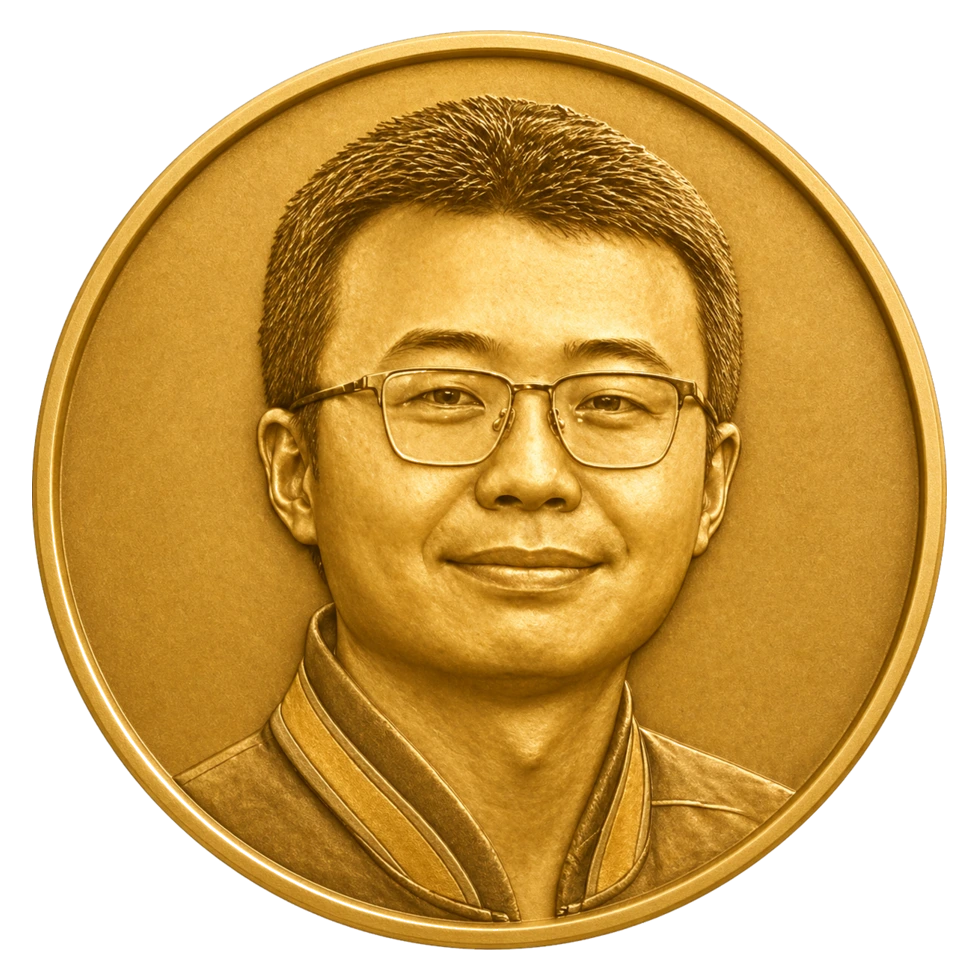
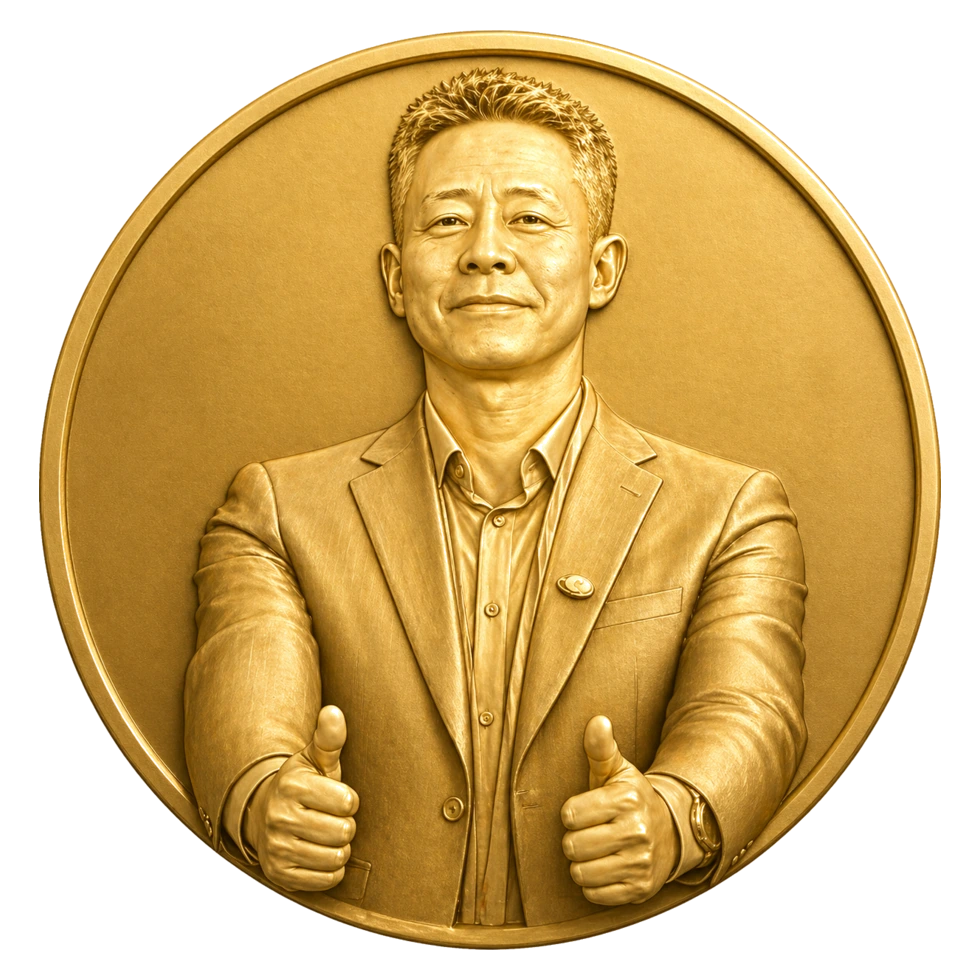
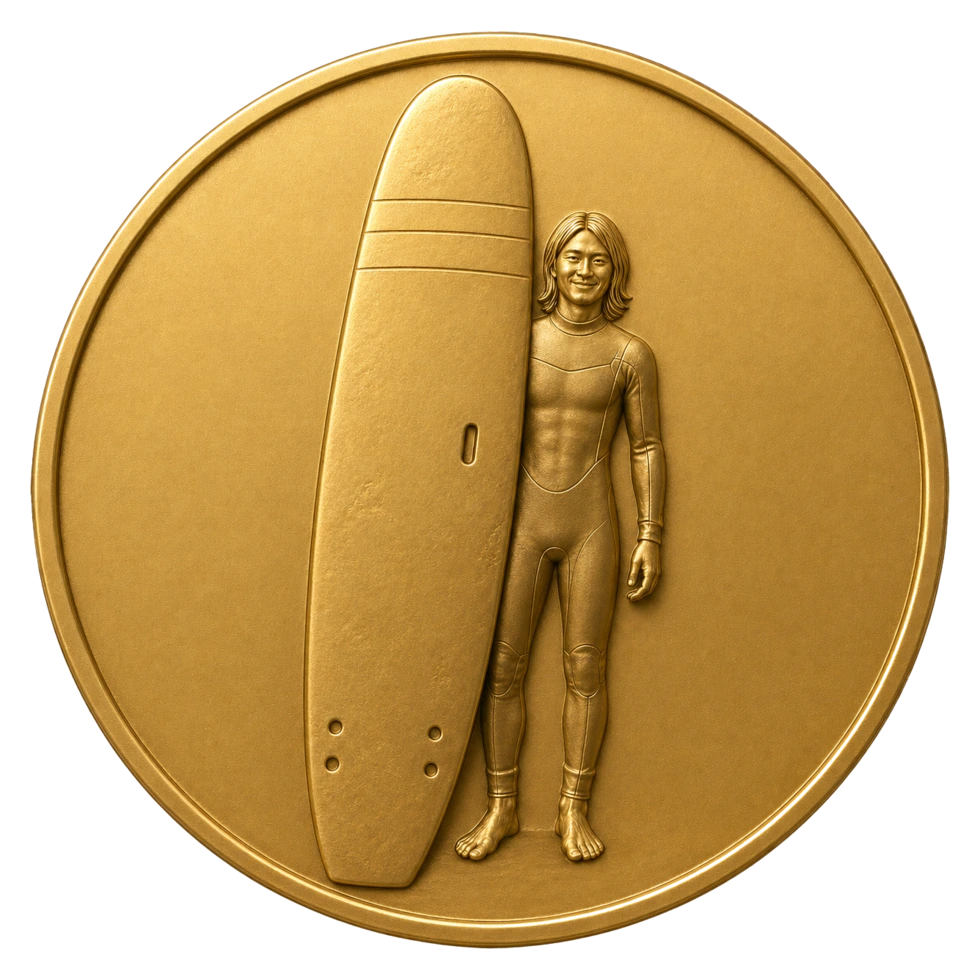
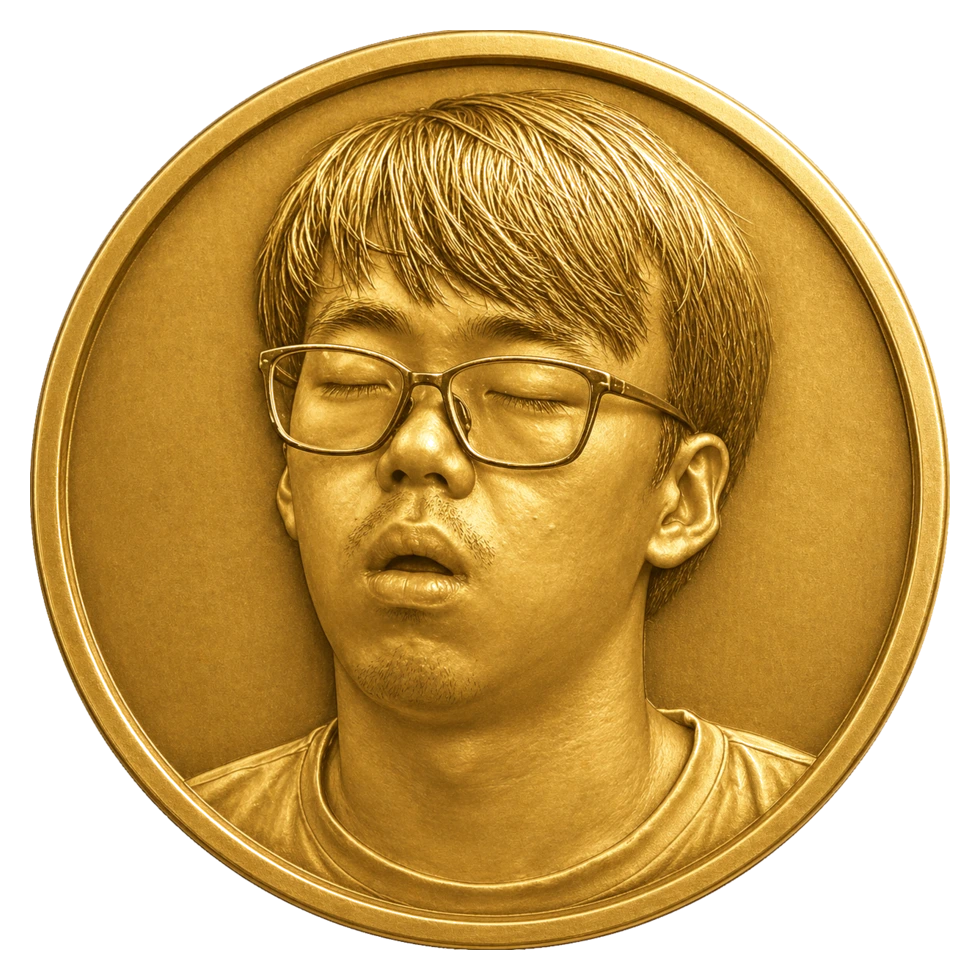
Five awards set, all worthy candidates invited; one yuan may be modest, but ceremony must be complete
July 14, 2026, Beijing — Following its formal establishment in April, the Ding Prize Temporary Preparatory Committee today released the Trial Measures for the Inaugural Ding Prize Categories and Selection Procedures. The first edition establishes five categories—the PhD Student Award, Postdoctoral Fellow Award, Supervisor Award, Sports Award, and Moyu Award—to recognize outstanding performance in research training, early-career development, mentorship, physical activity, and the nonlinear emergence of inspiration.
The five awards cover research in radio astronomy, astronomical instrumentation, and scientific data processing, including but not limited to fast radio bursts, pulsars, neutral hydrogen, the interstellar medium, and galaxy evolution. The committee hopes that both a cosmic signal lasting only milliseconds and a paper revised over several years can find an appropriate place in the Ding Prize evaluation system.
The award structure emerged from three full days of discussion: a proposal on day one, its rejection on day two, and the discovery on day three that the first proposal was actually acceptable. The committee therefore concluded that research administration resembles data processing—sometimes the first version was not wrong; everyone is simply accustomed to rerunning it.
The annual Ding Prize purse remains RMB 1. In principle, the five awards divide it equally, giving each laureate RMB 0.2—a vision of five awards advancing together, each two-jiao share shining brightly. The committee stressed that while the prize money approaches the financial background level, its spiritual signal-to-noise ratio must not be underestimated: the budget has a ceiling, but interpretation is unlimited.
General nomination and review rules: favoring acquaintances, with reasons required
The Ding Prize does not accept individual applications, provides no public registration portal, and does not require candidates to submit research plans, personal statements, exercise logs, recommendation letters, or accounts of their deeds.
All candidates are nominated internally by the selection committee on the basis of everyday contact, collaboration, group-meeting performance, laboratory lore, and other verifiable facts. Within the committee, this system is candidly known as:
The acquaintance-based nomination system.
The committee's formal explanation is that those selected will naturally be people the committee knows; however, acquaintances must still possess qualities that are admirable, respectable, or at least worth including in a press release.
- Familiar but without achievement: not admitted.
- Accomplished but unknown to anyone: reconsider after the committee expands its social circle next year.
- Both familiar and accomplished: a priority discovery target under this system.
- Unknown to the committee but suddenly bearing gifts: treated as anomalous radio-frequency interference.
In principle, each committee member may nominate no more than two people in each category.
Candidates generally need not be informed in advance. Repeated inquiries about review progress will not improve the probability of winning, though such behavior may be logged as a persistent search for low-signal-to-noise information.
Deliberations follow the principles of contribution first, evidence as foundation, stories as a bonus, and relationships disclosed. Teacher-student, collaborator, sports-partner, dining-partner, and shared-moyu relationships need not lead to recusal, but must be declared before the meeting so others can judge whether a comment is professional evaluation or an acquaintance filter.
I. PhD Student Award: the paper unfinished, the resolve unbroken
The PhD Student Award is open to current doctoral students in the laboratory and recognizes outstanding progress in scientific research, technical methods, data products, teamwork, or laboratory public service.
Doctoral researchers move year-round among observational data, code errors, manuscript drafts, and group-meeting slides. They are among the longest-duration, highest-repetition signals in laboratory research—and among those most susceptible to temporal broadening.
The award is not decided solely by publication counts, nor is enthusiasm measured by nights spent awake. The committee primarily considers:
- Whether the candidate has posed a clear and valuable scientific question.
- Whether the candidate has made a practical contribution that can be independently identified.
- Whether data processing, methods, and conclusions are reliable.
- Whether the candidate can discover, acknowledge, and correct errors.
- Whether code, data, and workflows are organized well enough that someone else can just about continue using them.
- Whether the candidate accepts responsibility in collaboration rather than appearing only when the paper is nearly complete.
Work involving fast radio bursts, pulsars, neutral hydrogen, the interstellar medium, galaxies, and data processing may all be considered. The committee especially values doctoral students who can distinguish real signals from radio-frequency interference, baseline fluctuations, and software anomalies—and answer “Are you sure this is not a bug?” with evidence rather than faith.
Research resilience also matters, but physical exhaustion is not to be repackaged as academic virtue. Revising carefully after rejection is resilience; uploading the old version again after three sleepless days is a file-management problem.
In addition to RMB 0.2, the laureate receives one “no-all-nighter voucher.” It fully expresses the committee's support for healthy research, but has no binding force on supervisors, collaborators, or submission deadlines.
II. Postdoctoral Fellow Award: stationed here, with the mind beyond the sky
The Postdoctoral Fellow Award is open to current laboratory postdoctoral fellows and recognizes outstanding independent research, project advancement, methodological innovation, support for younger colleagues, and connective work across the team.
A postdoc is a complex academic state: no longer a student, yet still receiving messages that begin with “while you are at it”; expected to become independent, yet also required to think about the next contract, the next grant, and the next server that still accepts logins.
The Postdoctoral Fellow Award focuses on:
- Whether a clear and independent research direction is taking shape.
- Whether vague ideas can be turned into executable projects.
- Whether the candidate bears substantive responsibility in key work.
- Whether the candidate can collaborate across projects, methods, or teams.
- Whether the candidate helps doctoral students and younger colleagues solve real problems.
- Whether the candidate can identify which deadline will explode first when several approach at once.
Excellent postdoctoral work should resemble a high-quality fast radio burst: it need not last long, but its information density must be high. It may be surprising, but should not resemble human-made interference—loud, frequent, and impossible to explain.
The Postdoctoral Fellow Award uses a two-stage selection procedure.
Stage one: anonymous blind review
The committee secretary removes names, supervisors, and other obvious identity markers from internal nomination summaries, retaining only actual contributions and supporting facts. Reviewers independently assess importance, originality, independence, reliability, and completeness.
Because the laboratory is small, distinctive research topics, code-variable naming habits, or slide fonts may quickly reveal a candidate's identity. The committee regrets this, but considers the blind-review procedure basically valid if a reviewer completes at least one paragraph before recognizing the candidate.
Stage two: acclamation at the meeting
Candidates who pass blind review proceed to the committee meeting. After the chair reads the principal contributions, members state their views in turn:
- “Good!” — approval in principle.
- “Very good!” — strong approval.
- “Let us discuss it later!” — more discussion required.
- Silence — possibly opposition, or possibly replying to a message.
Inspired by the spirit of ancient collective acclamation, the procedure is known internally as “neo-Roman academic deliberation.” Acclamations record direction only; volume, pitch, duration, and voice cracks carry no weight. Megaphones earn no extra votes, and anyone organizing a cheering squad must clean the meeting room afterward.
If two candidates receive equal support, the committee discusses further. If they remain indistinguishable, preference goes to the person who can explain the principal contribution in three sentences. A truly brief and bright result should not last forty minutes at the abstract stage.
The laureate receives RMB 0.2 and may write in their biography that they were “jointly certified through anonymous blind review and public acclamation.”
III. Supervisor Award: build ladders for others, do not compete for them
The Supervisor Award recognizes outstanding contributions to talent development, research guidance, team building, and the growth of early-career scholars.
Supervisors are essential but difficult-to-calibrate infrastructure in the research community. They may not run every line of code, yet one question—“Is this result reliable?”—can cause all code to be run again. They may not be first authors, yet appear in every draft's comments, every change in research direction, and every meal spent reassuring a student.
The Supervisor Award focuses on:
- Whether students' and early-career researchers' independent contributions are respected.
- Whether authorship, ownership of results, and development opportunities are fair and transparent.
- Whether the supervisor provides actionable improvement directions instead of only identifying problems.
- Whether students may voice disagreement in group meetings.
- Whether practical help is provided during rejection, stalled projects, or career anxiety.
- Whether young scholars are trained to work independently and eventually dare to disagree with their supervisor.
- Whether “think about it again” can be expanded into “which direction should you think in?”
The committee also nominates this award internally. Students need not write recommendation letters, and supervisors are discouraged from mobilizing students to manufacture popular demand. Decisions rely on long-term observation, public facts, and higher-credibility shared assessments from the tea room.
Supervisors may not nominate themselves, directly or indirectly, through statements or behavior such as:
- “I genuinely do not care about honors like these.”
- “I hear you are evaluating some kind of supervisor award?”
- “Young people should learn to express gratitude proactively.”
- “I do not do scholarship for awards, although an award should not be given carelessly.”
- “Enough money is enough; too many honors are a burden, though one would be acceptable.”
- Suddenly increasing the frequency of hosted meals during selection and casually asking about committee progress afterward.
The committee classifies the first examples as routine probing, the middle statements as precise signaling under the banner of indifference to fame, and the final behavior as approaching a substantive campaign. None improves the chance of winning, though the rhetorical technique may be archived for a future Academic Expression Award.
Normal, long-term, unconditional meal invitations remain unaffected and may be a positive factor. If invitations cluster only in the nomination period, the committee may inspect menus to investigate motive.
To preserve movement among candidates, the Supervisor Award has a cooling-off rule:
A person who becomes a valid candidate three consecutive times without winning must sit out one selection cycle.
The rule does not deny the candidate's ethics or contribution. It allows reputation to cool, reviewers to meet other supervisors, and students to accumulate new moving stories.
After the pause, the person may be nominated again and earlier contributions are not erased. The committee will not accept last year's evaluation with only the year changed, nor the claim that three unsuccessful final candidacies demonstrate universal acclaim.
The laureate receives RMB 0.2 and the annual title “Students are temporarily not quite as afraid of you.” Its validity depends on the page count of the next set of manuscript comments.
IV. Sports Award: movement and stillness sustain long hours of sitting
The Sports Award encourages laboratory members to exercise, maintain physical health, and contribute to participation, organization, and team building in sports.
Researchers need both fast-radio-burst-like explosive power and survey-like endurance: the ability to sprint before a deadline and to move a project steadily over several years.
Recognized activities include, but are not limited to, running, swimming, badminton, table tennis, basketball, football, fitness training, cycling, hiking, stair climbing, booking venues, organizing registration, bringing drinking water, and collecting balls after play—important work long neglected by conventional evaluation systems.
Candidates need not submit screenshots, wearable records, scores, or medical reports. The committee will not privately inspect anyone's step count, heart rate, or exercise apps.
Review relies primarily on everyday committee observation and facts widely known within the laboratory, focusing on:
- Whether participation is sustained.
- Whether the candidate organizes or encourages collective activity.
- Whether teammates, opponents, and differences in ability are respected.
- Whether clear progress is made safely and in moderation.
- Whether the candidate can return to research normally after competition.
- Whether “exercise recovery” has been used to avoid group meeting for three consecutive days.
A single extreme performance does not decide the award. One high-intensity session is only one single pulse; a long-term, regular, repeatable habit is closer to a repeating source worthy of continued observation.
There is no reliable evidence that pull-up counts cause citation counts, nor that planks directly improve data signal-to-noise. Regular exercise does, however, help researchers continue facing unfinished work with relatively intact bodies, which is sufficient reason for the award.
The laureate may voluntarily give a brief demonstration at the ceremony. Performance on the day is for entertainment only and cannot alter the completed selection: the main sample is frozen, and one follow-up observation should not overturn the final result.
V. Moyu Award: the person seems away, the mind is still computing
The Moyu Award is the most controversial of the five categories and perhaps the one that most fully expresses the laboratory spirit.
The committee holds that although the name moyu sounds light, the work recognized is not. Research cannot be measured entirely by keyboard noise, online time, or desk occupancy. Someone may sit at a screen for hours and produce no valid signal; someone else may leave for a glass of water and return having understood the source of a baseline fluctuation.
The award therefore asks not where the candidate was sitting, but whether the problem was eventually solved; not whether a window was minimized, but whether a real result exists; not whether the person appeared busy, and never treats reasonable rest as wrongdoing.
Effective moyu resembles a low-duty-cycle repeating fast radio burst: mostly quiet, but occasionally producing a burst of exceptionally high information density. Ineffective moyu resembles human-made interference: frequent, bandwidth-filling, disruptive, and scientifically valueless.
The Moyu Award recognizes situations such as:
- Writing a small tool while waiting for a program, which the whole group later adopts.
- Solving a long-standing problem during lunch, a walk, or tea-room conversation.
- Finding forgotten but valuable data while organizing old files.
- Building a new interdisciplinary connection while reading an apparently unrelated article.
- Identifying a systematic error that had troubled a project for months after taking a short break.
- Preventing an incorrect result from entering a paper after intending only to take a quick look.
- Writing genuinely useful automation out of a desire not to repeat mechanical work.
The award does not accept self-applications. A committee member or at least two informed observers must encounter the story in ordinary interaction before internal nomination. Repeatedly insisting that one's own behavior “really counts as effective moyu” usually weakens the story's natural quality.
Review considers four factors:
- Unexpectedness: did the event genuinely depart from the original plan?
- Effectiveness: did it produce a verifiable practical contribution?
- Creativity: did it show an unconventional way of solving a problem?
- Story value: will the committee still want to retell it years later?
The committee strictly distinguishes effective moyu, normal rest, and simple procrastination.
Normal rest is a legitimate right and needs no prize to justify it. Effective moyu takes a detour and unexpectedly solves the problem. Procrastination takes a detour and finds the problem still waiting in the same place.
Deliberately manufacturing accidents, staging encounters, falsifying the timing of inspiration, or offering no result for an extended period under the claim of “brewing a major breakthrough” disqualifies a candidate. Long periods without replying do not automatically make someone a fast radio burst source. No signal is no signal; not everything can be explained as waiting for the next repeating burst.
The laureate receives RMB 0.2 and the title “Model Individual for a Low-Duty-Cycle, High-Effective-Output Research Mode.” The title may not be used to justify leave, delay, or disappearance.
Selection meetings and smoke-signal announcements
Except for the two-stage blind review and acclamation used by the Postdoctoral Fellow Award, the remaining categories are normally decided in closed committee meetings.
Before the meeting, the secretary reads the candidate list and nomination reasons. Members may add facts, raise objections, or recount previously unknown laboratory stories that are genuinely relevant. Remarks should rely on concrete events rather than seniority, atmosphere, or “I know this person well, so I know.”
Each category is voted on separately. Depending on conditions, the committee may count raised hands, nods, written ballots, or acclamations. After each round, a symbolic smoke signal announces the result:
- White smoke: a valid decision has been reached and a laureate selected.
- Black smoke: no consensus yet; discussion continues.
- Indeterminate smoke: the equipment is not calibrated, with no connection to political compromise.
When white smoke appears, the secretary rings a table bell and formally reads the laureate's name. A cup and spoon may substitute if no bell is available.
If one category produces black smoke for three consecutive rounds, discussion must pause for coffee and a fresh look at the evidence. A category may remain vacant; white smoke must never be forced, or the procedure loses meaning even if it produces a result.
All smoke must be represented by electronic animation or another safe symbol. Burning ballots, manuscript drafts, or referee reports inside the meeting room is forbidden. Any attempt at ceremony that triggers alarms, server shutdown, or evacuation is a major review incident.
Results become official only after white smoke and the secretary's formal announcement. Social-media screenshots, tea-room rumors, corridor cheers, and pre-made congratulatory posters do not constitute a result.
Prize payment and ceremony arrangements
The inaugural Ding Prize ceremony is tentatively scheduled for December 31, 2026. If observations, meeting conflicts, server failures, or other force majeure intervene, it may be postponed to a day when at least five laureates and one reviewer can attend together.
The ceremony will in principle be held in a shared laboratory space.
Weather does not normally affect the ceremony. The committee notes that clear skies are not a universal requirement for radio observations, though they do help with outdoor laureate photographs.
Each laureate receives RMB 0.2, preferably by electronic payment, avoiding travel and administrative costs greater than the award while searching for twenty-cent coins.
Laureates may donate the money back to the next prize pool and receive a certificate stating that the funds completed one closed propagation loop.
Each acceptance speech is limited to 15 seconds and should resemble a good fast radio burst: brief, bright, and information-rich, but not dispersed beyond the audience's comprehension.
For every additional 10 seconds, the speaker must donate RMB 0.01 to the next prize pool. Anyone speaking for fewer than three seconds must at least add, “Thank you, Mr. Ziheng Ding.”
When announcing the rules, the anonymous committee chair said:
There are five awards and only one yuan. Doctoral students have resolve, postdocs have transformation, supervisors have virtue, sports have strength, and moyu has accidental wisdom. Let each find its proper place, and ceremony is fulfilled.
He then added:
Some results resemble fast radio bursts: they appear for only an instant, yet deserve repeated playback. Some contributions resemble continuum emission: rarely conspicuous, but always supporting the whole laboratory. The Ding Prize seeks precisely these signals not yet fully cataloged by traditional systems.
On the sustainability of the prize
The Ding Prize will continue its operating principle of small sums, opacity, and a sustainable form of exhausting the pond to catch the fish.
Members of the public may express donation intentions in whole-yuan multiples, normally no more than RMB 10 per contribution, so the prize does not acquire an excessive valuation before establishing a mature governance structure.
Any actual donation must follow applicable formal financial and administrative procedures. The previously mentioned locked biscuit tin is only a visual symbol of thrift and will not hold real funds.
If annual available funds exceed RMB 10, the committee may purchase paper cups and tea bags. If they exceed RMB 20, it may submit the major proposal of purchasing a second packet of biscuits.
That proposal will normally use an ordinary vote rather than acclamation, to avoid disturbing other nearby meetings.
About The Ding Prize
The Ding Prize is a non-traditional creative award rooted in research life in Tsinghua University's Radio Astronomy Laboratory. With minimal funding and maximal ceremony, it records effort, growth, mentorship, health, and unexpected inspiration in a research community.
The prize believes that results should be evaluated seriously, contributions should be recognized promptly, relationships may be acknowledged openly, and humor deserves a complete charter.
The money is only one yuan; must ceremony therefore remain undone?
— End —
News contact: The Ding Prize Temporary Preparatory Committee. Committee size: Reportedly expanded to six, though apart from the interim chair the other five still do not know they belong to it.
Contact email: [email protected]
Please include “Ding Prize inquiry” in the subject line. Messages without a subject may be identified as radio-frequency interference; sending the same message three times will not increase priority, but will help the committee confirm that the signal repeats.